Dressmaker Beginner's Guide: First Steps in Your Shop
New to the Dressmaker game? This beginner guide walks you through the shop, the sketchbook, the cutting table and your first customer commissions.
Dressmaker is a cozy crafting simulation where every stage of making a dress is under your control: choosing fabric, arranging and cutting out patterns, sewing the pieces together, and decorating the finished garment. This beginner guide explains how the shop fits together, what each workstation does, and how to get through your first commissions without wasting fabric or reputation.
How the game loop works
Every piece you make follows the same flow, and understanding it early saves a lot of trial and error:
- A customer brings a request. Townsfolk want dresses for important events, and each of them has individual tastes you can learn.
- You design in the sketchbook. You sketch the dress, pick its colours and attach fabric samples and appliqué ideas before any cloth is cut.
- You buy fabric and lay out the pattern. Cotton, linen, wool, silk and velvet are all on offer, and how you arrange your pattern pieces — with the grain or on the bias — is what shows up on the final dress.
- You cut, then sew. The pieces are stitched together on a hands-on sewing machine, and your feeding technique shows in the result.
- You decorate and deliver. Buttons, bows, appliqué and lace trims go on wherever you like, and a finished dress earns you coin and reputation.
That loop is the whole game — but each stage has depth, and the rest of this guide gives you the map.
Learn your workstations
Your shop is a chain of workstations, and problems usually trace back to one of them. This is what you are working toward: a finished gown, styled and lit in the photo mode you unlock for showing off completed dresses.
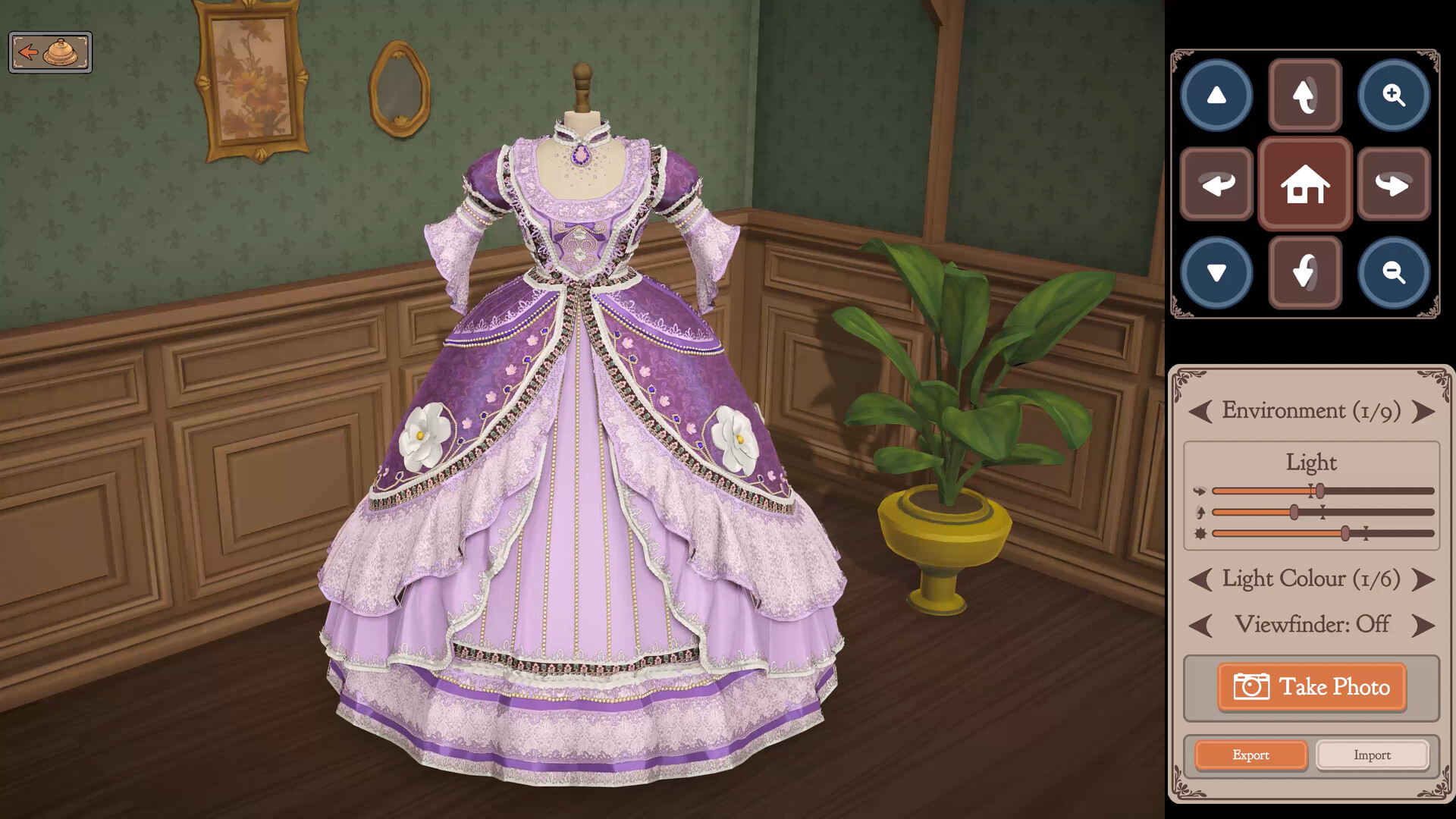
Photo mode: a finished gown on the mannequin, ready for its close-up.
- The sketchbook is where decisions are cheap. Experiment here, not with expensive silk on the cutting table. Each spread shows the customer's request with its starred requirements and budget, style part pickers for bodice, collar, sleeve and skirt, and a fabric metre estimate before you commit to anything.
- The cutting table rewards patience. Pattern placement decides both the look of the dress and how much fabric you consume, so resist the urge to drag pieces around randomly.
- The sewing machine is the most hands-on part of Dressmaker. You feed fabric through it yourself, and steady feeding produces clean seams.
- The decoration stage has no wrong answers — trims and accessories can go wherever your creativity takes you, which makes it the safest place to experiment.
- The shop window is your fallback: display your own designs there and sell dresses off the rack when no commission is pending.
Your first commissions: a sensible order
The game eases you in, but a few habits will make the early hours smoother:
- Take requests you can read clearly. Early customers describe what they want; matching an obvious request beats gambling on a risky design while your skills are low.
- Use cheaper fabric while you learn. Cotton and linen are forgiving. Save silk and velvet for when your cutting and sewing feel consistent — mistakes hurt more on expensive cloth.
- Finish dresses, don't abandon them. Reputation comes from turning in work. A modest dress delivered beats a grand dress abandoned halfway.
- Pet the kitty. It does nothing for your profit margin. Do it anyway. It is that kind of game.
Skills that pay off all game
Three habits separate a smooth shop from a frustrating one:
- Preview on the mannequin before sewing. The mannequin preview shows how your cut pieces will come together. Ten seconds there routinely saves a whole garment.
- Keep one "house style". Having a go-to silhouette and colour palette you can produce quickly means commission work never stalls, while you experiment freely in the shop window between customers.
- Read the customer, not just the request. Dresses are tailored to events and to individual tastes. A dance-worthy dress and a garden-party dress are not the same dress, even in the same colour.
Where to go next
Once your first commissions are done, pick the direction that matches what tripped you up:
- Unsure why a dress came out looking wrong? Read our pattern guide on grain and bias.
- Seams uneven or fabric puckering? The sewing machine guide has feeding drills.
- Curious which cloth to buy? The fabric guide compares cotton, linen, wool, silk and velvet.
- Want more coin? The money guide covers off-the-rack selling and how to keep commissions flowing.
Dressmaker rewards care over speed. Settle in, thread the machine, and let the town's wardrobe fill up one well-made dress at a time.
Game screenshots: Dressmaker © Cozy Lives / Free Lives.