Dressmaker Bias Cut Guide: When to Cut on the Bias (and When Not To)
What cutting on the bias means in the Dressmaker game, how bias placement changes drape and the final dress, and when a bias cut beats the grain — plus how to fix a bias mistake.
Few mechanics in Dressmaker generate as many questions as cutting on the bias. Players ask what it does, when the game wants it, and why their carefully placed dress suddenly drapes like a curtain instead of falling in soft folds. This guide answers all three. It deepens the shorter treatment in our pattern placement guide and focuses on the bias specifically: what it means in game terms, when to choose it, when to avoid it, and how to rescue a dress when you get it wrong.
What "cutting on the bias" means in Dressmaker
Dressmaker's own description of the mechanic is the best starting point: whether your pattern is aligned to the grain or cut on bias, how you arrange and cut out your fabric is what appears on the final dress. In other words, placement is not cosmetic. The cutting table does not just prepare pieces — it decides how the finished garment reads.
In real sewing, the bias is the diagonal direction across a woven cloth, at 45 degrees to the lengthwise and crosswise threads. Fabric cut on the bias stretches and drapes in a way that fabric cut straight does not. Dressmaker borrows exactly this idea:
- Grain-aligned pieces are placed with their grain arrow along the fabric's length. The panel holds its shape: crisp, orderly, structured.
- Bias-cut pieces are rotated diagonally across the cloth. The panel gains fluid, stretchy drape — the fabric falls in curves, clings and swishes rather than standing.
The game surfaces this as a visible, scored mechanic. Every pattern piece carries grain arrows, and the cutting table gives each placement a live Grain Quality rating as you work.
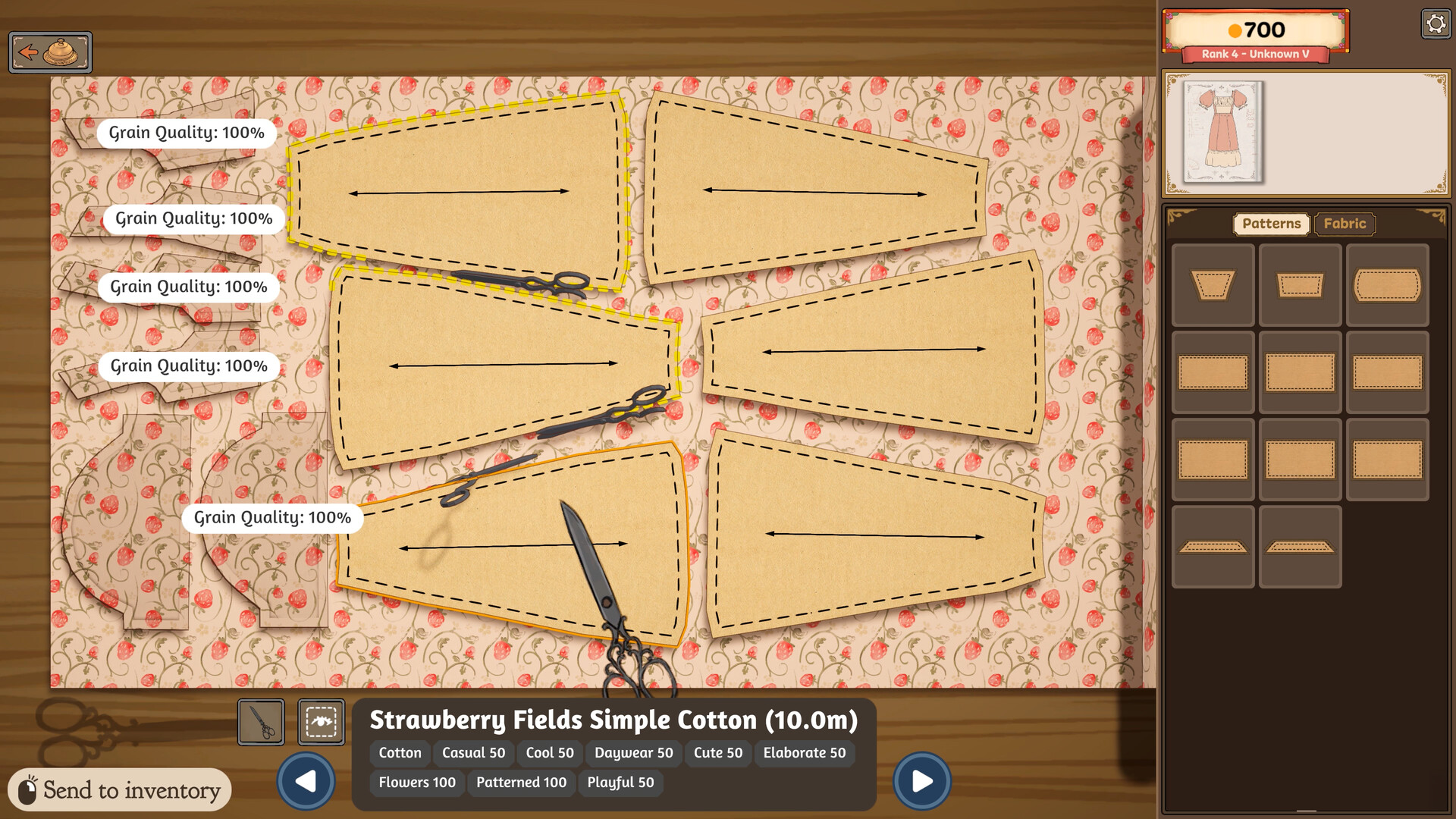
Each piece shows its grain arrow and a live Grain Quality rating before you commit the scissors.
When a bias cut is the right call
Bias placement is not a mistake to avoid — it is a tool with specific jobs:
- The customer asked for flow. Requests that describe a dress as flowing, soft, romantic or dramatic are bias-cut requests. A long skirt placed on the bias swishes and clings; the same skirt on the grain stands like a lampshade.
- The fabric is silk. Silk is the natural bias partner. It is the one cloth whose drape genuinely flatters diagonal cutting, and the game's fabric personalities reflect that. Velvet behaves in a related way, but silk is where the bias pays for itself.
- The design mixes directions on purpose. A bias panel set against a grain panel reads as deliberate design. That contrast is one of the few free ways to make a simple dress look custom-made.
When to keep the piece on the grain
The bias has real costs, and knowing them is half the skill:
- Structured pieces want grain. Bodices, waistbands, collars and anything that should hold a silhouette fights you on the bias. The dress drapes beautifully and fits like a sack.
- Patterned and directional cloth gets chaotic. Stripes, prints and strong textures run in odd directions when panels are rotated. If the bolt has a clear direction, bias placement shows it — sometimes beautifully, often accidentally.
- Bias layouts eat fabric. Diagonal pieces cannot pack as tightly as straight ones. On a tight budget, a bias layout can push the same dress past the cloth you can afford.
The bias cut skirt, and other famous commissions
Early in the campaign the game hands you a ruffle skirt commission — finishing it for the first time is worth the "Sew Long" achievement — and bias behaviour matters most on exactly this kind of piece. Community discussion of the game is full of players wrestling with bias-cut skirts in particular: the piece looks fine on the table and then drapes very differently on the mannequin. The habit that fixes almost every case is the same one: preview on the mannequin before cutting. It is the only place a wrong placement costs nothing.
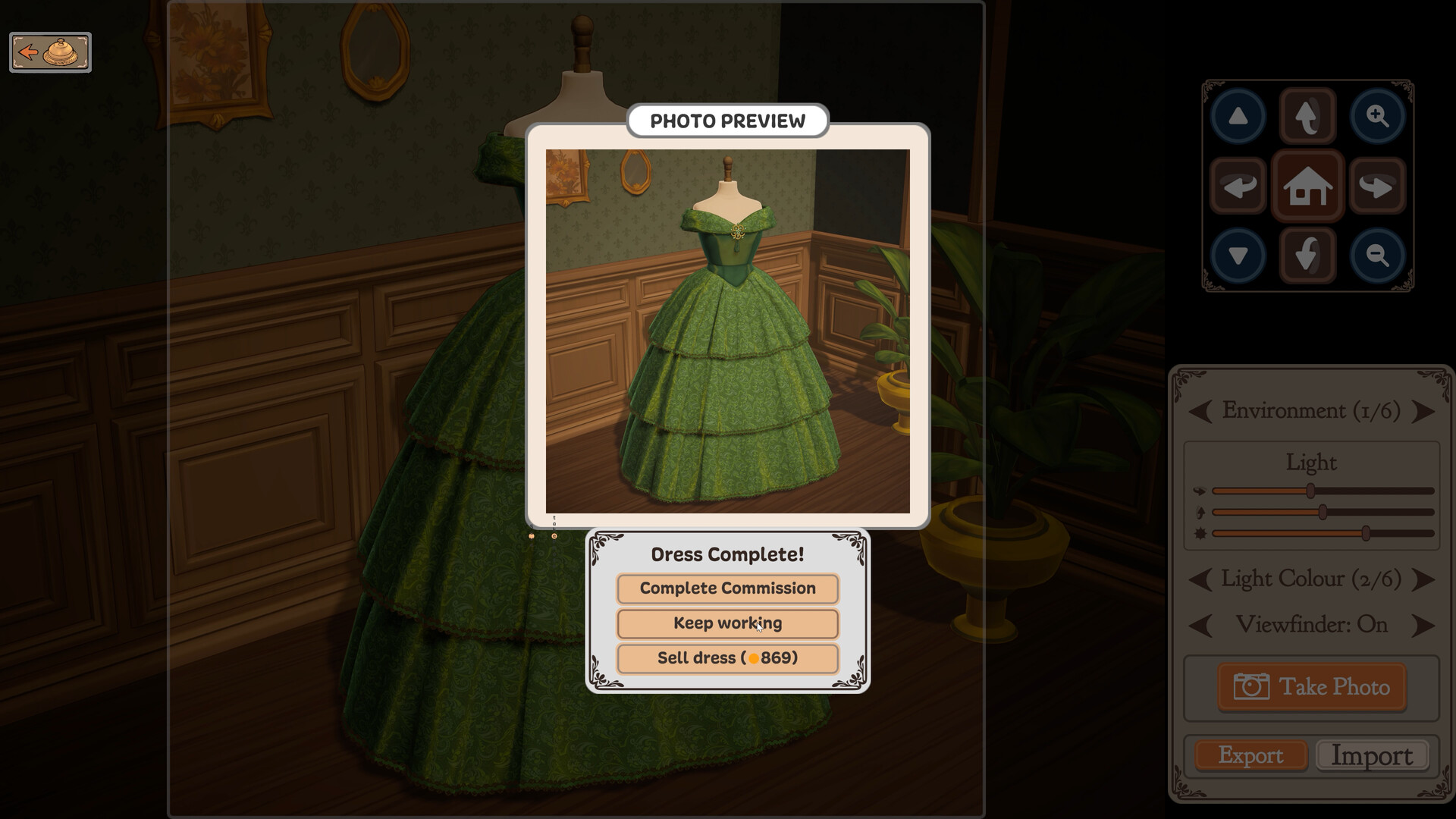
The mannequin preview shows drape before the cloth is committed — make it a reflex.
You can fix a bad bias call — at a price
Two rules make bias experimentation safe:
- Recuts are allowed. Drag a cut piece back into your inventory and re-cut it from new fabric, or a different fabric entirely. The catch: the original cloth is gone. Recutting fixes orientation mistakes; it does not refund fabric.
- There is no undo at the cutting table. Mistakes cost money, so rotate first, check the Grain Quality feedback, and only then cut.
One thing that will not save you: decorations. Piling on lace, bows and buttons does not recover quality lost to bad cutting — the game scores quality from placement and sewing accuracy, while accessories only shape the style tags the customer reads.
FAQ
What does bias mean in the Dressmaker game?
Cutting on the bias means placing a pattern piece diagonally across the fabric instead of along its grain. The finished panel gains a fluid, stretching drape, and because the game renders placement onto the final dress, the difference is visible on the garment itself.
Does bias cutting affect quality in Dressmaker?
Yes, through the Grain Quality rating on the cutting table. The game rates each placed piece; keep the rating at 100% unless a design deliberately calls for otherwise, and remember that accessories cannot compensate for a badly placed piece.
Why does my bias-cut dress look wrong?
Most often the piece needed grain, not bias: structured panels and directional prints both turn chaotic when rotated diagonally. Preview the layout on the mannequin before cutting, and if it reads wrong there, drag the piece back to your inventory and re-cut it from fresh cloth.
When should I cut on the bias in Dressmaker?
When the commission calls for flow — long skirts, soft drapes, romantic or dramatic requests — and especially when the panel is silk. Keep bodices, collars and structured pieces on the grain so the dress keeps its shape.
Game screenshots: Dressmaker © Cozy Lives / Free Lives.