Dressmaker Fabric Guide: Cotton, Linen, Wool, Silk, Velvet
Every fabric in the Dressmaker game explained — how cotton, linen, wool, silk and velvet behave at the cutting table, the sewing machine and on the customer.
Fabric is the first real decision in every Dressmaker commission. The game offers a range of cloth — cotton, linen, wool, silk and velvet — and because you choose fabric per panel of the garment, your choice shapes the cutting, the sewing and the final look. This guide explains how to think about each fabric and how to match cloth to customer, event and skill level.
How fabric choice ripples through the whole dress
Dressmaker gives you full control over what fabric to use for each panel, and that choice shows up on the final dress. So fabric is not just a colour or a price tag — it is a statement about how the dress should hang, move and feel. Before buying, ask three questions:
- What is the event? A work outfit and a formal gown call for different cloth.
- What does the customer like? Tastes are individual; a wool enthusiast and a silk devotee will not want the same bolt.
- What is my skill today? Expensive, dramatic cloth punishes wobbly cutting and uneven sewing far more than plain cloth does.
The five fabrics, in plain terms
Fabric is bought at the emporium, where every bolt carries attribute tags — formal, glamour, romantic, cute, eveningwear and more — plus a per-metre price. Read the tags, not just the colour: they are what the customer's request will be scored against.
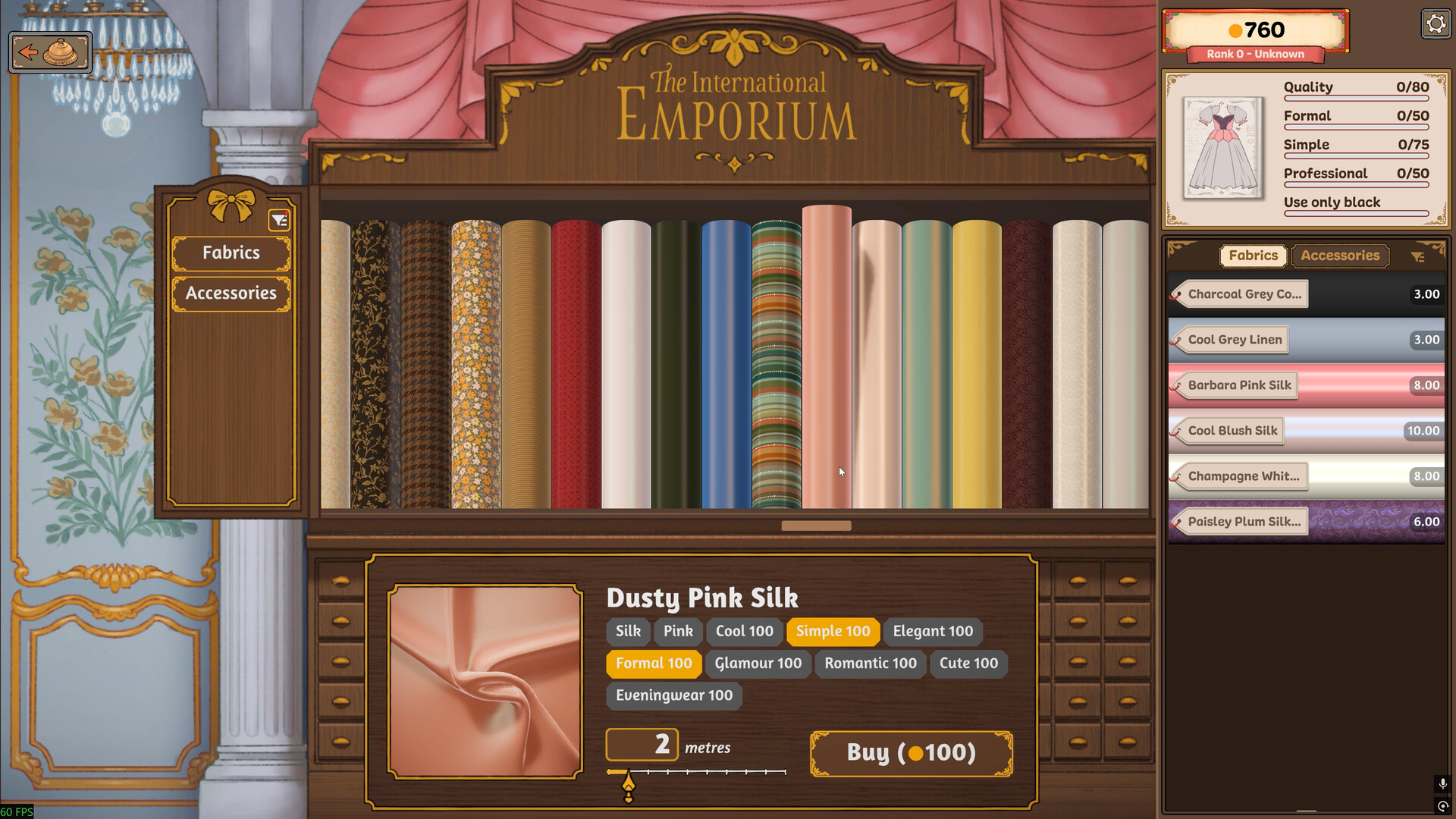
The International Emporium: "Dusty Pink Silk" with its attribute tags and a buy-by-the-metre price tag.
The game keeps things cozy rather than clinical, so think of the five fabrics as five personalities:
- Cotton — the apprentice. Predictable, friendly and affordable. It cuts cleanly, sews without drama and forgives layout mistakes. When you are learning the sewing machine or testing a risky pattern layout, cotton is the cloth that lets you experiment.
- Linen — the honest summer cloth. Lighter in feel than cotton, with a natural, breathable character that suits daytime events and relaxed silhouettes. Great for customers whose tastes run simple and fresh.
- Wool — the structured one. Wool holds a shape. For bodices, coats and dresses that need presence, it is the reliable choice, and it flatters customers who want a dress that feels substantial.
- Silk — the diva. Sleek, flowing and unforgiving. Silk is where bias cuts shine — the fabric drapes in a way flat weaves cannot — but it magnifies every slip at the cutting table and every rush at the machine. Reach for it when the commission is grand and your hands are steady.
- Velvet — the showstopper. Deep, rich and dramatic, velvet makes an entrance. It is the natural choice for evening events and customers who want to be remembered — and like silk, it is costly to learn on. Cut once, cut carefully.
Matching fabric to the customer's event
Events are the easiest compass. As a rule of thumb:
- Daytime, casual, outdoor → cotton or linen.
- Work, structure, cooler weather → wool.
- Formal evening, "make an impression" → silk or velvet.
- Uncertain → the customer's stated tastes outrank every rule of thumb.
The sketchbook is your dressing room: attach fabric samples there before committing coin, and compare how the same dress reads in two cloths.
Mixing fabrics like a designer
Because panels are chosen separately, you can combine cloths deliberately:
- A wool bodice with a cotton skirt gives structure up top and movement below — a classic silhouette for everyday elegance.
- A silk panel against a matte cloth creates contrast that reads as intentional design rather than decoration.
- Trim pieces in a different fabric (collars, cuffs, sashes) are a cheap way to make a simple dress feel custom.
The mannequin preview is the judge: if the combination looks deliberate on the mannequin, it will read as deliberate on the customer.
A skill-building path through the fabrics
If you want a training plan, this order works well:
- Cotton until your seams are consistently clean and your layouts waste little.
- Linen and wool to learn how weight and structure change a silhouette.
- Silk to master bias cutting and gentle machine feeding.
- Velvet for the commissions where the town is watching.
Cheap cloth teaches; expensive cloth performs. Move up a fabric when the one below stops surprising you — and when it does, you will find that every other part of Dressmaker got easier along the way.
Game screenshots: Dressmaker © Cozy Lives / Free Lives.